
You love the simplicity of a single diamond, but then a ring turns sideways and a little row of diamonds appears underneath. That is the appeal of a hidden halo: a detail you discover as the ring moves.
A hidden halo is a row of small diamonds set beneath the centre stone’s edge. The exact arrangement varies between designs. A conventional halo forms a visible border around the stone when you look down at the ring. The hidden version puts the decoration lower, so its effect depends much more on your viewing angle.
If you want extra sparkle without a prominent outline around the centre, it is worth a closer look. The question is whether you enjoy the detail on your hand as much as you do in an enlarged photograph.
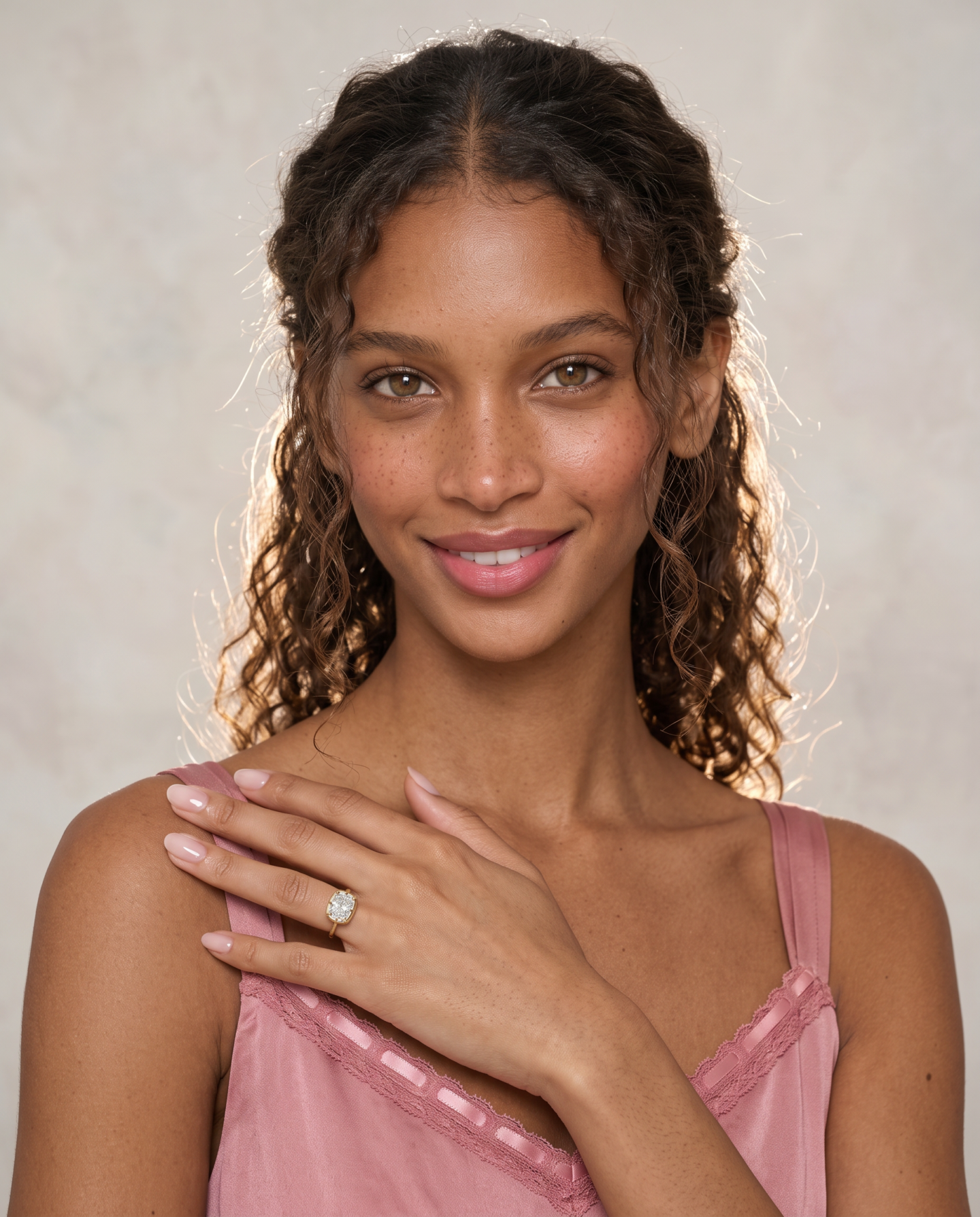
Where does the hidden halo sit?
Start with a side view. Look for the small diamonds beneath the edge of the centre stone, then follow them around the setting. Notice how much metal surrounds them and whether the claws interrupt the row. Different arrangements can look quite different despite sharing the same description.
Lily Arkwright’s lab grown diamond rings include the round-centre version of Paris, with a hidden halo visible from the side. It is a useful example of why the overhead photograph only tells part of the story: the decoration sits beneath the main outline.
Diamond-set shoulders are a separate choice. Those are the sections of the band leading up to the centre. A ring can combine a hidden halo with a plain band, or add small diamonds along the shoulders too. Decide where you want the sparkle, rather than treating every decorated ring as the same style.
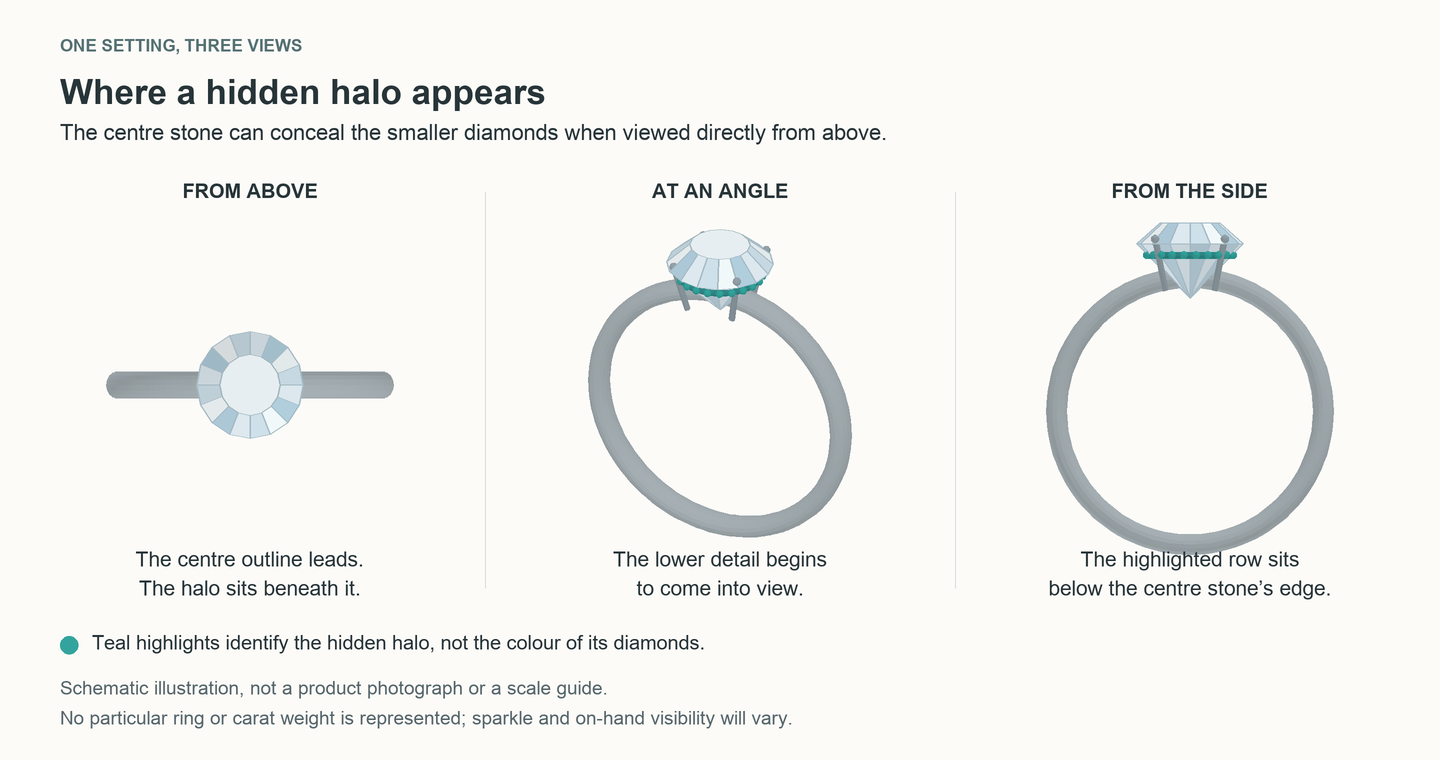
Schematic illustration of one setting from three angles. Teal identifies the hidden halo; no particular product, carat weight or on-hand appearance is represented.
Will it make the diamond look bigger?
A conventional halo can increase the ring’s visible footprint by surrounding the centre stone with smaller ones, as GIA’s guide to ring settings explains. The border becomes part of what you see from above.
A halo tucked beneath the stone does a different job. Do not assume it will create that same larger outline. It may catch your eye at an angle while leaving the top view largely focused on the centre stone.
For a fair comparison, look at rings with similar centre-stone dimensions and band widths. Otherwise, a larger centre or finer band can influence your impression before the hidden halo has entered the picture. If extra finger coverage is your priority, compare the overall dimensions rather than choosing by the word “halo”.
Look at it while your hand moves
A close-up makes a tiny row of diamonds easy to admire. During everyday wear, you may notice it in brief glimpses as you pick up a cup or turn your wrist. That quieter effect is exactly what some people like.
Try the ring with your hand relaxed, then turn it gently. Look from your own position and from the side someone sitting opposite would see. You do not need to hold an awkward pose to make every diamond visible.
When shopping online, request a short side-to-top video and an on-hand view. Check the centre-stone size shown, especially if you plan to order a different size. A tightly cropped product image can demonstrate the workmanship, but it cannot tell you how noticeable the detail will feel during wear.
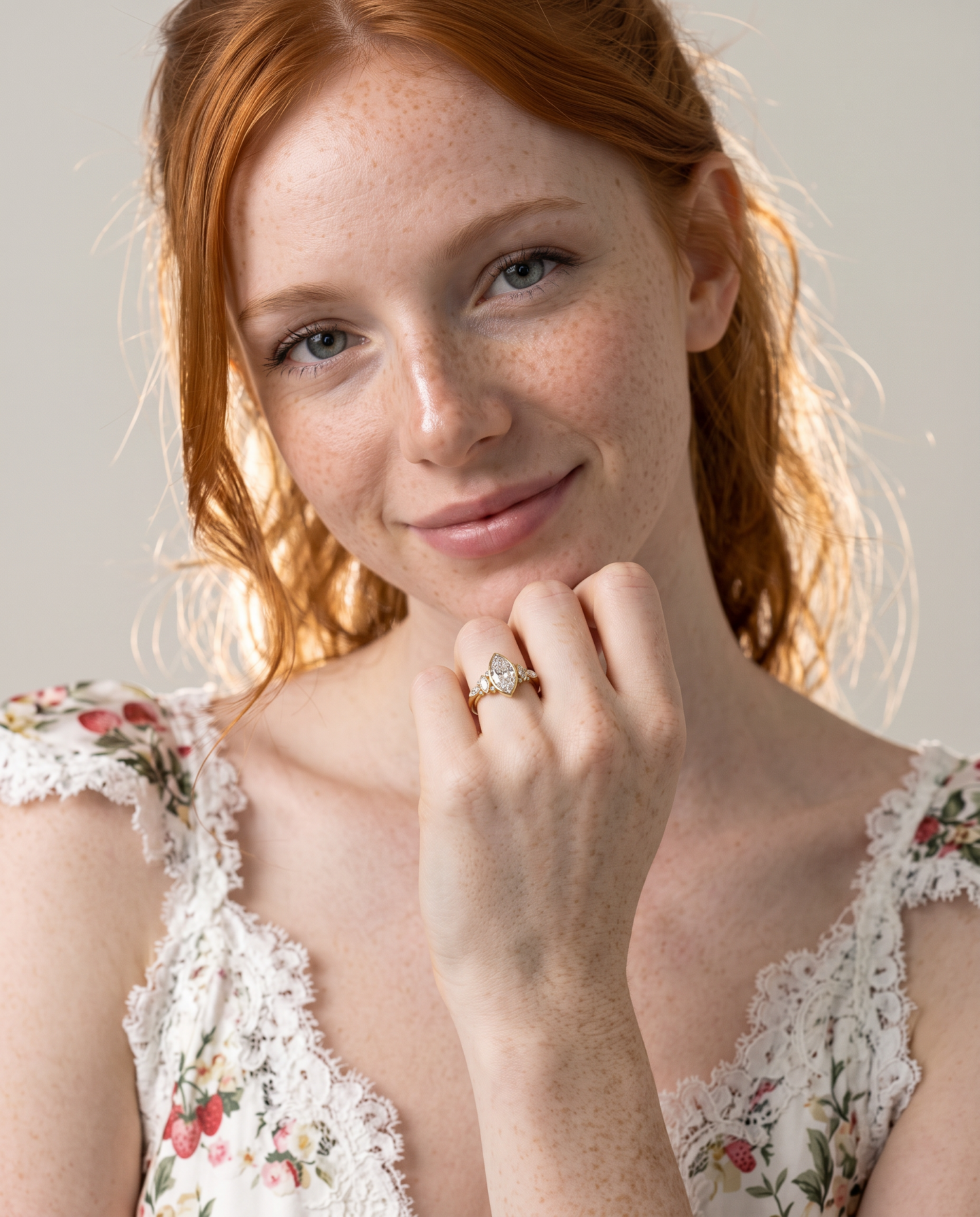
Check the space for your wedding band
“Hidden” describes the diamonds’ position, not how low the ring sits. Ask how far the setting projects above the finger and compare the profile of the version you would actually order.
Then try it beside a wedding band. Look underneath the centre stone: is there space for the band, or does it meet the hidden halo’s setting? Ask the jeweller to assess any contact points rather than relying on how neatly the pair photographs.
A curved band may create room around the setting. A small gap is also an option if you like the look. Either way, check how much of the hidden detail remains visible once both rings are on. The pairing can change the very feature that attracted you.
Is the extra detail worth it?
A hidden halo adds small stones that need attention alongside the centre setting. Ask how to clean beneath the stone and when the jeweller recommends inspections. The National Association of Jewellers identifies loose stones and worn or damaged claws as reasons to seek professional attention.
For the style decision, start with the jewellery you naturally reach for. If you enjoy a simple outline with an unexpected detail, a hidden halo may feel just right. If you want sparkle that is obvious whenever you look down, compare a visible halo or diamond-set shoulders.
Compare the price of a hidden-halo ring with a similar design without that detail, keeping the centre stone’s specifications and the metal comparable. Then decide what the extra decoration adds for you. It does not have to be noticeable to everyone else. It should simply be something you are pleased to find when you turn your hand.
